
Patty Douglas
-
English
-
Français
-
ASL
Exploring Neurodivergence, Disability, and Gender-Based Violence: Toward More Affirming and Accessible Practices
This Webinar was presented and recorded on March 23, 2026.
This LN/KH Webinar explored the intersections of neurodivergence, disability, and gender-based violence through critical disability studies, story-making, and neurodiversity-affirming approaches. Presented by Dr. Patty Douglas, Associate Professor of Disability Studies at Queen’s University and a former special education teacher, this session drew on creative and participatory approaches that centre historically excluded perspectives, inviting participants to consider how dominant narratives about disability, care, communication, and harm shape responses to violence within education, health, and community systems.
Rather than positioning neurodivergence as deficit or risk, the discussion opened space to re-imagine safety, accountability, and support in ways that affirm difference and attend to systemic and structural barriers. Participants were encouraged to reflect on how trauma- and violence-informed, disability justice, and decolonizing approaches can inform more accessible and inclusive GBV-related practices.
Webinar Recording
Learning Objectives
By the end of this presentation, participants will be able to:
- Recognize how neurodivergent communication, sensory, and regulation differences may shape experiences and disclosures of GBV.
- Identify systemic and structural barriers that neurodivergent and disabled survivors may encounter.
- Reflect on dominant narratives about disability, care, and harm within GBV systems.
- Consider creative, affirming, and accessibility-oriented approaches that support safety and inclusion.
Speaker
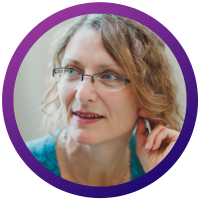
Patty Douglas (she/her) is an Associate Professor, Inaugural Chair in Student Success and Wellness and Director of the Centre for Community Engagement and Social Change in the Faculty of Education at Queen’s University. Her research focuses on rethinking deficit approaches to disability in education, health and social services using critical and creative approaches including critical disability studies, mad (m)othering, decolonial disability studies and arts-based and storytelling methodologies. Douglas founded and currently leads the Re•Storying Autism project (www.restoryingautism.com), an umbrella of multimedia storytelling projects in Canada, the UK and Aotearoa New Zealand that collaboratively reimagine neurodivergence, practice and care in ways that affirm difference. As a white settler academic and critical ally, Douglas is deeply committed to decolonizing research. She also brings lived and critical insight into systems as a former special education teacher, mother of two neurodivergent sons, one of whom is autistic and neurodivergent academic. She publishes widely in her fields and is an international speaker and leader in critical and affirmative approaches to autism, care and storytelling methodologies. Her recent book, Unmothering Autism: Ethical Disruptions and Affirming Care was published in 2024 with UBC Press.
Explorer la neurodivergence, le handicap et la violence fondée sur le sexe : vers des pratiques plus affirmatives et accessibles
Ce webinaire a été présenté et enregistré le 23 mars 2026.
Ce webinaire du Learning Network et du Centre de connaissances (LN/CC) a exploré les intersections entre la neurodivergence, le handicap et la violence fondée sur le sexe (VFS) en s’appuyant sur les études critiques sur le handicap, la création de récits et les approches affirmatives de la neurodiversité. Présentée par la Dre Patty Douglas, professeure agrégée en études du handicap à l’Université Queen’s et ancienne enseignante en adaptation scolaire, cette séance s’est inspirée d’approches créatives et participatives qui mettent de l’avant les perspectives historiquement exclues. Elle a invité les personnes participantes à réfléchir à la façon dont les récits dominants sur le handicap, les soins, la communication et le préjudice façonnent les réponses à la violence dans les systèmes d’éducation, de santé et communautaires.
Plutôt que de présenter la neurodivergence comme un déficit ou un risque, la discussion a ouvert un espace pour réimaginer la sécurité, la responsabilité et le soutien de façon à affirmer les différences et à tenir compte des obstacles systémiques et structurels. Les personnes participantes ont été encouragées à réfléchir à la façon dont les approches tenant compte des traumatismes et de la violence, la justice pour les personnes en situation de handicap et les approches décolonisatrices peuvent éclairer des pratiques liées à la VFS plus accessibles et inclusives.
Enregistrement du webinaire
Objectifs d'apprentissage
À la fin de cette présentation, les participants seront en mesure de :
- Reconnaître comment les différences sensorielles, de communication et de régulation chez les personnes neurodivergentes peuvent façonner les expériences et les divulgations de VFS.
- Cerner les obstacles systémiques et structurels que les personnes survivantes neurodivergentes et en situation de handicap peuvent rencontrer.
- Réfléchir aux récits dominants sur le handicap, les soins et les préjudices dans les systèmes de réponse à la VFS.
- Considérer des approches créatives, affirmatives et axées sur l’accessibilité qui soutiennent la sécurité et l’inclusion.
Conférencière
Patty Douglas (elle) est professeure agrégée, première titulaire de la Chaire en réussite et bien-être des étudiantes, et directrice du Centre for Community Engagement and Social Change à la Faculté d’éducation de l’Université Queen’s. Ses recherches visent à remettre en question les approches axées sur le déficit à l’égard du handicap dans les domaines de l'éducation, de la santé et des services sociaux, en s’appuyant sur des approches critiques et créatives, notamment les études critiques sur le handicap, le mad (m)othering*, les études décoloniales sur le handicap ainsi que des méthodologies artistiques et narratives. Douglas a fondé et dirige actuellement le projet Re•Storying Autism (www.restoryingautism.com), un regroupement de projets narratifs multimédias au Canada, au Royaume-Uni et en Aotearoa (Nouvelle-Zélande), qui réimaginent de manière collaborative la neurodivergence, les pratiques et les soins, de façons qui valorisent la différence. En tant qu’universitaire blanche issue du colonialisme de peuplement et alliée critique, Douglas est profondément engagée dans la décolonisation de la recherche. Elle apporte aussi une compréhension vécue et critique des systèmes, en tant qu’ancienne enseignante en adaptation scolaire, mère de deux fils neurodivergents, dont l’un est autiste, et universitaire neurodivergente. Elle publie abondamment dans ses domaines, et est conférencière internationale et leader en matière d’approches critiques et affirmatives de l’autisme, des soins et des méthodologies narratives. Son ouvrage récent, Unmothering Autism : Ethical Disruptions and Affirming Care, a été publié en 2024 chez UBC Press.
* porte sur les intersections de la folie (Mad Studies), du handicap et du maternage
Exploring Neurodivergence, Disability, and Gender-Based Violence: Toward More Affirming and Accessible Practices
This Webinar was presented and recorded on March 23, 2026.
This LN/KH Webinar explored the intersections of neurodivergence, disability, and gender-based violence through critical disability studies, story-making, and neurodiversity-affirming approaches. Presented by Dr. Patty Douglas, Associate Professor of Disability Studies at Queen’s University and a former special education teacher, this session drew on creative and participatory approaches that centre historically excluded perspectives, inviting participants to consider how dominant narratives about disability, care, communication, and harm shape responses to violence within education, health, and community systems.
Rather than positioning neurodivergence as deficit or risk, the discussion opened space to re-imagine safety, accountability, and support in ways that affirm difference and attend to systemic and structural barriers. Participants were encouraged to reflect on how trauma- and violence-informed, disability justice, and decolonizing approaches can inform more accessible and inclusive GBV-related practices.
Webinar Recording
Learning Objectives
By the end of this presentation, participants will be able to:
- Recognize how neurodivergent communication, sensory, and regulation differences may shape experiences and disclosures of GBV.
- Identify systemic and structural barriers that neurodivergent and disabled survivors may encounter.
- Reflect on dominant narratives about disability, care, and harm within GBV systems.
- Consider creative, affirming, and accessibility-oriented approaches that support safety and inclusion.
Speaker
Patty Douglas (she/her) is an Associate Professor, Inaugural Chair in Student Success and Wellness and Director of the Centre for Community Engagement and Social Change in the Faculty of Education at Queen’s University. Her research focuses on rethinking deficit approaches to disability in education, health and social services using critical and creative approaches including critical disability studies, mad (m)othering, decolonial disability studies and arts-based and storytelling methodologies. Douglas founded and currently leads the Re•Storying Autism project (www.restoryingautism.com), an umbrella of multimedia storytelling projects in Canada, the UK and Aotearoa New Zealand that collaboratively reimagine neurodivergence, practice and care in ways that affirm difference. As a white settler academic and critical ally, Douglas is deeply committed to decolonizing research. She also brings lived and critical insight into systems as a former special education teacher, mother of two neurodivergent sons, one of whom is autistic and neurodivergent academic. She publishes widely in her fields and is an international speaker and leader in critical and affirmative approaches to autism, care and storytelling methodologies. Her recent book, Unmothering Autism: Ethical Disruptions and Affirming Care was published in 2024 with UBC Press.
All our resources are open-access and can be shared (e.g., linked, downloaded and sent) or cited with credit. If you would like to adapt and/or edit, translate, or embed/upload our content on your website/training materials (e.g., Webinar video), please email us at gbvln@uwo.ca so that we can work together to do so.