
Forums
.
Speaker Biographies

Dr. Gifty Asare
Dr. Gifty Asare is a Ghanaian Canadian neuroscientist and researcher from Tiohtià:ke/Montreal and is currently the Director of Research and Community Impact at WomenatthecentrE, a nonprofit by and for survivors of GBV. She holds a PhD in Psychology and Neuroscience from York University, with prior training in Psychiatry (McGill) and Neuroscience (Concordia). Her academic and professional work is rooted in quantitative and qualitative research, neuroimaging, and clinical intervention, with a focus on both younger and older adults; particularly as it relates to GBV, traumatic brain injury (GBV–TBI) and other intersecting injuries, injustices, and acts of violence.
Currently, Gifty is engaged in several national initiatives, including "Truth and Transformation: Advancing Gender Equity for Black Women, Girls, Gender Diverse, and Trans People in Canada (B-WGGDT)," which addresses the structural and systemic drivers of racialized gender-based violence in Canada. She is deeply committed to advancing survivor-led, culturally grounded, and trauma- and violence-informed responses to gender-based violence and brain injury across the lifespan and in racialized communities.

Eva Blum-Dumontet
Eva Blum-Dumontet is Head of Movement Building and Policy at Chayn, an organization providing online resources to survivors of tech-facilitated gender-based violence. A tech and human rights policy expert specializing on the intersection of gender and technology, she is currently leading Chayn's work on AI, promoting the use of encryption as a feminist issue, and working on the impact of image-based abuse in the Global South.
Prior to her role at Chayn, Eva held the position of Senior Policy Adviser at the Royal Society, the UK's national academy of sciences, where she worked on the role of AI in scientific research. She also spent eight years at Privacy International as a Senior Researcher.

Suzie Dunn
Suzie Dunn the Interim Director of the Law and Technology Institute and an assistant professor at Dalhousie University’s Schulich School of Law. Her research centers on the intersections of equality, technology and the law. She is a research partner on a four-year SSHRC funded research project on young people’s experiences with sexual violence online, DIY Digital Safety.

Dr. Kara Brisson-Boivin
Dr. Kara Brisson-Boivin (She/Her) is the Director of Research for MediaSmarts- Canada's centre for digital media literacy. Kara is responsible for the planning, methodology, implementation, and dissemination of key findings from original MediaSmarts’ research studies as well as evaluations of MediaSmarts’ programs. She also holds an appointment as an Adjunct Research Professor in the Sociology and Anthropology Department at Carleton University. Kara brings to MediaSmarts extensive publication experience in academic journals, magazines, news op-eds and research blogs; and a background in presenting research to key stakeholders on parliamentary committees, at academic conferences, invited talks, panels, keynote addresses, and in media interviews. She works with partners across academia, industry, government, and community organizations on online issues including digital wellbeing, digital equity and inclusion, privacy, hate, tech-facilitated violence and abuse, youth online engagement, and algorithms and artificial intelligence.

Nicola Henry
Nicola Henry is a Professor of Global Studies and Deputy Director of the Social Equity Research Centre at RMIT University, Australia. Her research focuses on technology-facilitated gender-based violence, including image-based sexual abuse, sextortion, and AI-generated sexual harms. She has led multiple national and international studies examining the prevalence, impacts, and prevention of digital abuse and works closely with policymakers, technology companies, and frontline services. Nicola is the co-developer of Umibot, a survivor-centred chatbot designed to support people affected by image-based abuse, and her work is grounded in feminist and design justice approaches to technology.

Mitzie Hunter
Mitzie Hunter is a dynamic, community-grounded trailblazer whose 30 years of leadership spans the nonprofit sector, private sector, and government. She was the first Black woman to serve as Ontario’s Minister of Education. She also served as Ontario’s Minister of Advanced Education and Skills Development and Associate Minister of Finance. Mitzie is a respected advocate for women, girls, and gender-diverse people. She is known for her expertise in an array of issues, from women’s leadership to inclusive economies to sustainable neighbourhood and city building.

Dr. Ellen M. Kaufman
Dr. Ellen M. Kaufman is an interdisciplinary researcher and Senior Research Associate at the Kinsey Institute. She received her Ph.D. in Informatics from Indiana University in Spring 2023. Her research focuses on the intersection of sexuality and technology, exploring how our relationships and overall sexual and emotional wellbeing are shaped by new modalities of connection. She is particularly interested in the use and implications of artificial intelligence within the context of romantic and sexual relationships, focusing on how sexual norms around consent, communication and gender roles are reconfigured by these dynamics. Her work has been published in peer-reviewed scientific journals including Psychology & Sexuality and The Journal of Sex Research.

Deepa Mattoo
Deepa Mattoo is a dedicated lawyer and intersectional feminist recognized for her commitment to advancing equity, anti-oppression, and anti-racism. Her extensive career spans various legal and leadership roles. Since 2019, Deepa has served as the Executive Director of the Barbra Schlifer Commemorative Clinic, overseeing multiple departments and directing the Clinic’s intervention and advocacy efforts. She has appeared before the Supreme Court of Canada, Parliamentary committees, and UN civil society meetings, advocating on a broad spectrum of social justice and human rights issues. In 2023, Deepa was appointed to the Domestic Violence Death Review Committee (DVDRC).
Deepa has trained thousands of service providers to support forced marriage survivors, racialized non-status women, and clients navigating immigration law. Since 2017, she has shared her expertise as an adjunct professor at Osgoode Hall Law School through numerous speaking engagements and interviews. Deepa's contributions have been recognized with several awards, including the Spirit of Schlifer Award in 2015 and the Law Society Medal and Women of Distinction Award in 2022 for her advocacy and access to justice efforts. In 2023, she received the Ontario Bar Association Award for Excellence in the Promotion of Women's Equality and the Desi Achiever’s Award for her exceptional contributions to human rights and access to justice. In 2024, Deepa was honoured with an Honorary Degree from Humber College in recognition of her contributions to social justice and equity. In May 2025, she received the Victim Services Award of Distinction from the Ontario Ministry of the Attorney General.

Caroline Masboungi
Caroline Masboungi is a French-Lebanese Gender-Based Violence specialist based in Geneva, leading UNICEF's global GBViE technology and innovation workstream. With over 15 years of experience across Africa, Asia, and the Middle East, she focuses on leveraging technology to address GBV, bridge the gender digital divide, and tackle technology-facilitated GBV. A trained lawyer specializing in humanitarian law, Caroline has worked with IOM, IRC, and OHCHR, combining humanitarian expertise with feminist research to center the voices of women and girls in digital and on-the-ground solutions. She spearheads initiatives like "Laaha," a virtual safe space empowering women and girls globally.
Gloria Thomson
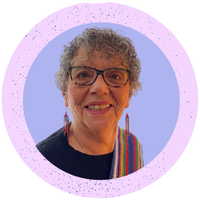
Gloria Thomson (pronoun she/her) is a proud Metis woman with roots in the Northwest (Manitoba). As a Kairos-trained Blanket Exercise Facilitator and former Senator for the Metis Nation of Ontario, Gloria brings a wealth of experience and cultural knowledge to her role. Her journey of discovering her Metis heritage as an adult uniquely positions her to understand the challenges many face in reconnecting to their Indigenous roots.
Currently serving as a Visiting Elder for Metis students at the University of Western Ontario’s Office of Indigenous Initiatives, Gloria is dedicated to supporting and encouraging others on their path of cultural discovery. Her approach combines humility, openness and a deep commitment to sharing and learning.

Aliina Vaisanen
Aliina Vaisanen is the Community Initiatives Manager of the Rebuilding Lives grant program at the Canadian Women’s Foundation. In her role, she connects and supports organizations running programs for survivors of gender-based violence throughout Canada. Aliina is passionate about inclusive, intersectional feminist approaches to supporting survivors and community building through feminist knowledge development and exchange.

Rhiannon Wong
Rhiannon Wong is the Project Manager of the Technology Safety Canada initiative with the BC Society of Transition Houses and Women’s Shelters Canada. She develops survivor-informed resources and delivers training to anti-violence workers nationwide on technology-facilitated gender-based violence (TFGBV). Her work highlights the dual role of technology, as a powerful tool for enhancing survivor safety and as a means for perpetrators to commit domestic violence, stalking, sexual assault, impersonation, and harassment. Beyond frontline training, Rhiannon works to advance private sector accountability by engaging tech companies to adopt safety-centered policies and design practices that prevent violence against women in digital spaces. Her expertise bridges survivor experience, technology, and systemic change. Rhiannon represented Canada as part of the official delegation to the 67th United Nations Commission on the Status of Women, where she shared insights from the Tech Safety Canada project on addressing TFGBV and building safer digital environments.