
Forums
.
Speaker Biographies
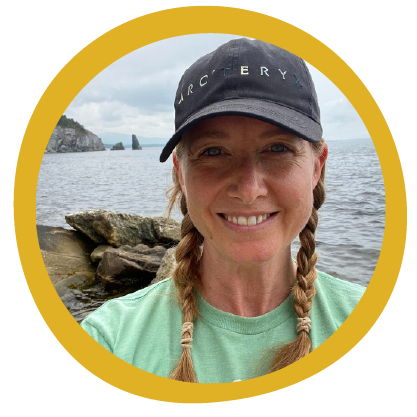
Kate Crozier
Kate Crozier (She/her) is the Interim Executive Director at Community Justice Initiatives (CJI). Before CJI, Kate dedicated much of her career to supporting individuals impacted by violence. Along the way, she worked with criminalized youth, homeless women, and sexually abused men—experiences that deepened her understanding of how systemic failures often lead to criminalization rather than the support people deserve. Over the past two decades, they have spent 10 years in the Violence Against Women (VAW) sector and 10 years in restorative justice. This journey has allowed them to address the impacts and root causes of gender-based violence while coordinating community-based projects and partnerships between CJI and other organizations.
Kate Crozier holds an M.A. in Leadership from the University of Guelph, a transformative experience that equipped her to lead and support teams through some of the most meaningful work they have ever known. Being part of the restorative justice movement inspires her daily because it provides a powerful framework for addressing both personal and systemic issues through learning and support. One of the most rewarding aspects of this work is collaborating with people who prioritize meaningful accountability, community building, and responding to the unique needs that arise from harm. Outside of work, I’m passionate about CrossFit and love encouraging others to experience its challenges and rewards.
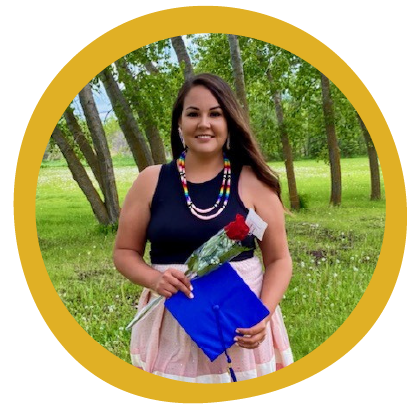
Wyome Dion
Wyome Dion, nehiyaw iskwew, from Kehewin Cree Nation is a mother to two beautiful children, social worker/good relationships worker and a justice advocate for Indigenous communities. She is currently completing her Indigenous Masters of Social Work Degree with University nuhelot’įne thaiyots’į nistameyimâkanak Blue Quills located just outside of St. Paul, AB. She has worked in the justice field for a number of years in different capacities working with victims of crime, restorative justice practices and now in her current roll as the coordinator for the Healing to Wellness Court in St. Paul, AB. The Healing to Wellness Court emphasizes utilizing restorative justice working with individuals, families and communities that addresses root causes of harm, trauma and addictions. Transformative justice work is around reconnecting to identity, community, language and relationships. Justice that is rooted in ceremony and healing.
Jenna Forbes
Jenna Forbes is a proud First Nations woman with roots in the Gitksan, Ts’msyen, and Haida Territories of BC. Jenna was born in Prince Rupert, BC and currently lives in Vancouver, BC.
Jenna is the Chief Executive Officer (CEO) of Vancouver Aboriginal Transformative Justice Services Society (VATJSS) and has now been in this role for 7 years. Prior to this role, she was the Senior Justice Advisor for 8 years. As CEO, Jenna uses traditional Indigenous approaches to support community members in conflict with the law. Primary services at VATJSS include Criminal Diversion; Indigenous Resource Workers within Corrections and local court houses; Gladue Aftercare; and various crime prevention projects . Jenna currently volunteers as a Board Chair Aboriginal Community Career Employment Services Society(ACCESS), Chair of Urban Spirit Foundation (USF), Co Chair of the Justice Roundtable for Metro Vancouver Aboriginal Executive Council (MVAEC) as well, she is the assigned Representative for the Indigenous Housing Steering Committee (IHSC) at the Metro Vancouver Homelessness Partnership Strategy and sits on the Vancouver Police Department Indigenous Advisory Committee (VPDIAC).
Prior to her work with VATJSS, Jenna gained significant experience in community-driven organizations including the development of the Recreation Department at the Vancouver Aboriginal Friendship Centre Society, Managing Coordinator of Kivan Boys and Girls Club and the Child and Youth Leader for the Vancouver Parks Board.
In 2016 Jenna acquired her Indigenous Business Certificate through UBC’s Sauder School of Business, which has helped her immensely create strong business strategies for VATJSS. Over the years, she has also obtained certificates in business writing from Vancouver Community College, Gladue report writing from the Legal Services Society, Facilitation Skills from the Justice Institute and in 2002 completed her 2 year diploma in Therapeutic Recreation. In 2007 she received a service award from the BC Association of Aboriginal Friendship Centres for her work supporting Aboriginal youth.

Dalya Israel
Dalya Israel (she/her) is Salal Sexual Violence Support Centre's (previously WAVAW) Executive Director. Dalya began her journey at Salal in 2002 as a volunteer and later went on to join the Victim Services Program in 2005. For the past 20 years she has had the honour of supporting survivors as they navigated systems after sexual violence and harm while also amplifying survivors' voices in circles of influence in order to make substantive changes that reflect the lived experience of survivors Salal serves. Dalya believes deeply that intersectional feminism, feeding our spirit and connection is the antidote to rape culture and that we must all continue to dream of the world we want for survivors in order to create it.
Dr. El Jones
Author, poet, journalist, educator, and advocate. Dr. El Jones is all these things and more, an outspoken activist, thinker and writer whose strengths converge in her spoken word performances.
A respected poet, Dr. Jones was two-time National Slam champion in 2007 and 2008, Poet Laureate of Halifax in 2013-2015, resident of the International Writing Program at University of Iowa in 2015, and poet in residence at University of Toronto Scarborough in 2021.
What defines her achievements is a commitment to activism and community advocacy to highlight inequities and redress injustices. The recognition of her performances, teaching and political commitment testifies to the exceptional influence she has exercised during the Black Lives Matter movement and the expansion of Black scholarship in Canadian academia.
Currently an Assistant Professor in the Department of Political and Canadian Studies at Mount Saint Vincent University, Dr. Jones has taught at Dalhousie University, Nova Scotia Community College, and Saint Mary’s University. In 2017-19, she was appointed to the 15th Nancy’s Chair in Women’s Studies, an illustrious position in feminist studies. She is also well-known in Wolfville: between 2012 and 2014, she taught five courses in Women’s and Gender Studies at Acadia.

Nermin Karim
Nermin Karim is the Director of Programs and Operations at North Shore Restorative Justice Society (NSRJ). As a lawyer, she worked in family law, mostly with women leaving abusive relationships, and in poverty law. She held the position of manager of NSRJ’s Restorative Response Program for almost 5 years. Her success in resolving sexual assaults restoratively led her to pursue her Master of Laws focusing on the use restorative responses to gender-based violence (GBV). In 2024 she worked with a colleague on a research project funded by the Law Society of BC, interviewing experts from all over the world who use Restorative Responses for GBV. The results of that study are expected to be released in 2025. Nermin’s recent publication, titled “A Criminal Resumé – BC’s Unjust Disclosure”, addresses BC’s misuse of non-conviction information (UBC Law Review 57:1). Nermin is a mother of four adult children who is constantly spamming her family with photos of sunrises and sunsets!
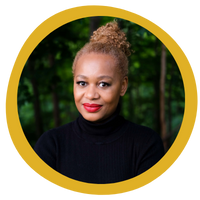
Nneka MacGregor
Nneka MacGregor, LL.B. is co-founder and Executive Director of the Women’s Centre for Social Justice, better known as WomenatthecentrE, a unique non-profit organisation created by and for women, trans, and gender-diverse survivors of gender-based violence (GBV). A Black Intersectional abolitionist feminist, international speaker, and Transformative Accountability/Justice practitioner, Nneka is an expert advisory panel member of the Canadian Femicide Observatory for Justice and Accountability and sits on several Boards and committees, including the Federal Advisory Council on the Federal Strategy Against GBV. She co-founded the Black Femicide Canada Council, and her research focuses on sexual violence, and the intersection of strangulation, Traumatic Brain Injury and GBV. She received the 2019 PINK Concussions Award and the 2020 YWCA Women of Distinction Social Justice Award. She was recently appointed one of two 2024 Activists-in-Residence (AiR) at the University of Guelph, in Ontario, Canada.
For more information, view her profile on LinkedIn
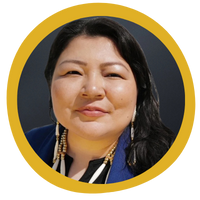
Janice A. Makokis B.A. (with Distinction), M.A. (IGov), L.L.B.
Janice Makokis is a nehiyaw iskwew (Cree woman) and mother to son Atayoh Kan Asiniy (Spirit Rock) Makokis from Onihcikiskwapiwin (Saddle Lake Cree Nation) of Treaty No. 6 Territory in what is now called Alberta (Canada). She is an Indigenous legal scholar, an Indigenous rights advocate and a treaty educator. Currently, she is an assistant professor at the Faculty of Law, University of Windsor. She was appointed the Ianni Legal Scholar in 2021, at Windsor Law School. She has also worked with various Indigenous Nations in the area of Treaty advocacy and protection, the development and implementation of Indigenous laws and land based Indigenous education and governance initiatives. She is also a co-producer of a film entitled “Awasisak Our Future” which tells the story of a group of treaty walkers who embark on a learning journey and have conversations about the importance of Treaties, the treaty relationship, treaty obligations and the work required for Indigenous and non-Indigenous people to work together for the betterment of future generations. Janice also serves as a board advisor for the Yellowhead Institute (Toronto Metropolitan University), an Indigenous led research and education centre.
She has worked for Federal and Provincial Governments and First Nations in the area of law, policy, governance and First Nations issues. She has been an advisor to tribal councils and First Nations advising on matters that impact upon First Nations rights and jurisdiction. Her greatest learning came in working with residential school survivors in the independent assessment process (IAP), as part of the residential school settlement agreement. She is also a sessional Faculty at the University of Alberta in the Faculty of Extension’s Indigenous programs, the University nuhelot’įne thaiyots’į nistameyimâkanak Blue Quills (a former residential school), and Yellowhead Tribal College’s Indigenous Governance program. She is part of a University of Alberta SSHRC Research project called “Just Powers” which is an inter-disciplinary and community-engaged network of research projects focused on climate justice issues. The project “Just Powers” focuses on creating socially just approaches to energy transition and a livable future for all. She frequently does presentations to law schools, law firms, universities, businesses, companies and many organizations about Indigenous Treaties, Indigenous advocacy, Indigenous nationhood, reconciliation and Indigenous politics and self-determination. She holds a B.A. in Native Studies (minor Political Science) from the University of Alberta, an M.A. in Indigenous Governance from the University of Victoria and an L.L.B (Bachelor’s of Law Degree) from the University of Ottawa.
She has been involved with International Indigenous advocacy work through various International bodies and United Nations mechanisms to advance the discourse on Indigenous People's rights. She served as the co-chair/ co-coordinator on the North American Indigenous Peoples Caucus (NAIPC) from 2013-2016, a voluntary Indigenous body that makes recommendations to the agenda items that are addressed by the United Nations Permanent Forum on Indigenous Issues. Janice has also drafted submissions to the United Nations Committee on the Elimination of Racial Discrimination (CERD) and attended the UN CERD on behalf of First Nations. She has been a rapporteur at international meetings with her involvement in the NAIPC. Janice has spent the past 25 years learning about nehiyaw (Cree) ways of being and laws from Elders and Indigenous knowledge keepers. She participates in activities/ education initiatives that help advance the struggles of self-determination; Indigenous governance and the recognition of Indigenous Treaties in Turtle Island (now called North America). She is passionate about anti-racism, transformative justice, decolonization initiatives, cultural resurgence and revitalization efforts.

Misanka Mupesse
Misanka is a dedicated social worker and sex educator with many years of experience. Specializing in sex education for youth, she creates empowering programs that promote informed decision-making about bodies and relationships. Additionally, she has extensive experience supporting Black communities through grief, providing culturally competent care that honours individual experiences. With a holistic approach that integrates emotional, social, and educational support, Misanka aims to empower individuals and families to navigate life’s challenges.
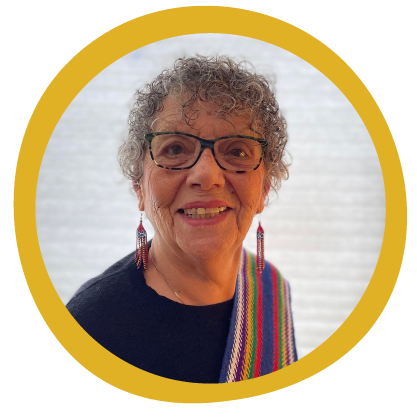
Gloria Thomson
Gloria Thomson (pronoun she/her) is a proud Metis woman with roots in the Northwest (Manitoba). As a Kairos-trained Blanket Exercise Facilitator and former Senator for the Metis Nation of Ontario, Gloria brings a wealth of experience and cultural knowledge to her role. Her journey of discovering her Metis heritage as an adult uniquely positions her to understand the challenges many face in reconnecting to their Indigenous roots.
Currently serving as a Visiting Elder for Metis students at the University of Western Ontario’s Office of Indigenous Initiatives, Gloria is dedicated to supporting and encouraging others on their path of cultural discovery. Her approach combines humility, openness and a deep commitment to sharing and learning
Moderators

Dr. Berivan Kutlay Sarikaya
Dr. Berivan Kutlay Sarikaya (she/her) is a Kurdish-Canadian prison scholar and Project Coordinator for the Initiative to End Gender-Based Violence at the Ontario Council of Agencies Serving Immigrants (OCASI). Her extensive human rights and social justice work focuses on designing trauma-informed, culturally responsive programs for non-status, refugee, and immigrant women.
She earned her PhD from University of Toronto, specializing in critical prison studies, decolonial feminist theory, and gender-based violence. Her research focuses on the experiences of Kurdish women political prisoners during Turkey's military junta era, exploring gendered colonial violence, criminalization, and revolutionary resistance strategies from a decolonial feminist lens. Currently, she is transforming her dissertation into a book while advancing interdisciplinary projects connecting Kurdish, Indigenous, and Black feminist activism against carceral colonial violence.
An active member of the Kurdish Gender Studies Network, she continues to advance critical conversations on gender, incarceration, and transformative justice.

Sami Pritchard
Sami Pritchard is a passionate and experienced community organizer, advocate and communicator with a deep commitment to anti-gender-based violence work. Much of Sami’s career has been dedicated to addressing systemic violence and barriers, working with individuals and communities impacted by gender-based harm and advocating for more equitable, community-driven approaches to justice. Her dedication to creating communities where people feel a sense of belonging, respected and cared for have guided her career and led her to her current role as the Director of Advocacy and Communications for YWCA Toronto – the city’s largest multi-service organization serving women, girls and gender diverse people. Through her role she leads the organization’s advocacy and government relations work, and advances strategic communications and knowledge mobilization efforts. Through her work at YWCA Toronto and as a lead of the YWCA Ontario Coalition, Sami has led collective efforts to have the City of Toronto and province declare intimate partner and gender-based violence an epidemic.
Energized by community, Sami is a firm believer in the power of collective action, care and liberation. Her thoughtful, intersectional approach to addressing systemic issues and commitment to building and centering community voices in her work supports efforts to positively influence public policy and government action.
All our resources are open-access and can be shared (e.g., linked, downloaded and sent) or cited with credit. If you would like to adapt and/or edit, translate, or embed/upload our content on your website/training materials (e.g., Webinar video), please email us at gbvln@uwo.ca so that we can work together to do so.