
Our Work
.
Responding to Intimate Partner Violence and Substance Use: Sex-, Gender-, and Equity-Based Approaches
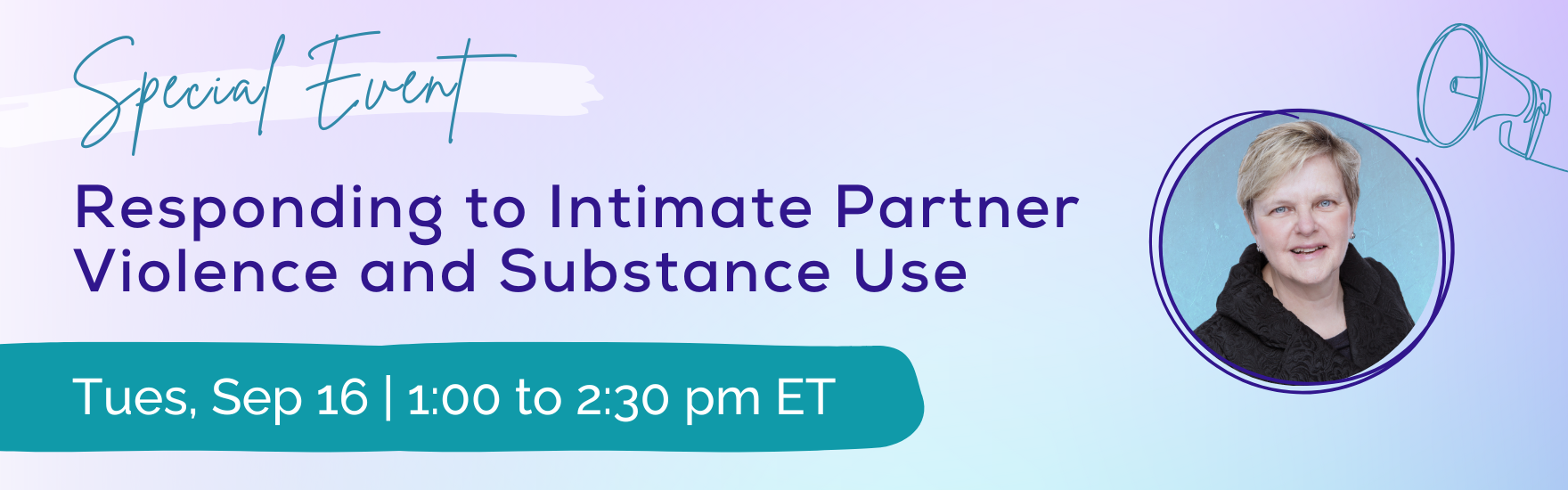
Date: Tuesday, September 16, 2025 | 1:00 – 2:30 PM ET
Presented by: Dr. Lorraine Greaves
The issues of intimate partner violence (IPV) and substance use (SU) are often intertwined, affecting both lived experiences and service responses in both fields. At times, IPV is affected by SU of partners or survivors, or SU is affected by IPV experiences. The relationships between SU and IPV are complex and multidirectional. However, across Canada, services for IPV and SU still largely operate independently, despite the frequent overlap in survivors’ lives and historical efforts to address these issues differently.
Gender-based violence (GBV) and allied service providers may find themselves supporting survivors whose experiences with SU extend beyond their existing capacity, training or what their roles have traditionally prepared them for along with organizational structures, policies and or mandates within which they work. And, survivors or participants in services in both SU and IPV areas may get incomplete or misinformed responses. At this point, there is a need to provide education and practical strategies that help bridge these gaps and support service providers.
In this Special Event, Dr. Lorraine Greaves, Founding Executive Director and Senior Investigator at the Centre of Excellence for Women’s Health will explore the critical importance of approaches that simultaneously address IPV and SU, rooted in trauma- and violence-informed (TVI) care, and informed by sex-, gender-, and equity-based analyses (SGBA+). Drawing on evidence from Canadian and international interventions and decades of work at the intersection of substance use, trauma, and gender, Dr. Greaves will discuss how different substances, and different patterns of substance use, social perceptions, stigma, and intersecting concerns shape the lives of survivors.
This session will offer practical resources from the Centre of Excellence for Women’s Health and provide insights for GBV and allied service providers. Approaches such as motivational interviewing, reflecting on stigma, and starting conversations about various substances that promote safety, choice, empowerment, and self-determination will be discussed.
Learning Objectives
By participating in this Special Event, participants will enhance their ability to:
-
Recognize why approaches that simultaneously address IPV and substance use, rooted in trauma- and violence-informed (TVI) care and informed by sex-, gender-, and equity-based analyses (SGBA+), are essential, and why such integrated responses remain uncommon across service settings.
-
Consider the differential impacts of various substances including nicotine, alcohol, opioids, meth, and cannabis impact those affected by IPV and impact service responses.
-
Identify some practical strategies for GBV and allied service providers to reduce stigma, open supportive conversations, utilize motivational interviewing principles, and apply trauma- and violence-informed practices that uphold safety, empowerment, and self-determination.
Speakers
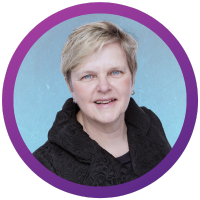 Dr. Lorraine Greaves
Dr. Lorraine Greaves is the founding Executive Director of the Centre of Excellence for Women's Health and its Senior Investigator since 2009, and a Clinical Professor at the School of Population and Public Health at the University of British Columbia. She was previously the Director of the Centre for Research on Violence Against Women and Children in London ON. She is a medical sociologist and has worked in education, government, hospitals, and academia. She was appointed Chair of Health Canada’s Scientific Advisory Committee on Health Products for Women in 2019. She has received numerous awards for her work, including the Order of Canada, and a Doctorate of the University from the University of Ottawa and a Woman of Distinction from the YWCA. She has extensively researched the issues of substance use and violence against women and contributed to practice change. She has led numerous national and international projects and has authored twelve books, 125 journal articles, 400+ reports, guidance documents, workbooks, toolkits and articles on sex and gender science, intimate partner violence and substance use.
All our resources are open-access and can be shared (e.g., linked, downloaded and sent) or cited with credit. If you would like to adapt and/or edit, translate, or embed/upload our content on your website/training materials (e.g., Webinar video), please email us at gbvln@uwo.ca so that we can work together to do so.